


As companies scale their cross-border operations and expand overseas, travel spend is becoming increasingly fragmented.
International flights, hotels, ground transportation, platform service fees, multi-currency payments, refunds, and itinerary changes—all of these routinely span multiple platforms, multiple accounts, and multiple settlement cycles at once.
For finance teams, the real challenge isn’t making the payment. It’s everything that comes after: continuously tracking the flow of funds, matching transactions to employees and bookings, and managing downstream reconciliation and refunds.
Why Corporate Travel Expenses Are Getting Harder to Manage
For companies with international operations, the complexity of travel spend rarely comes from any single transaction. It accumulates—through fragmented records, delayed visibility, and expenses that are simply hard to trace.
1. Spend Is Increasingly Fragmented
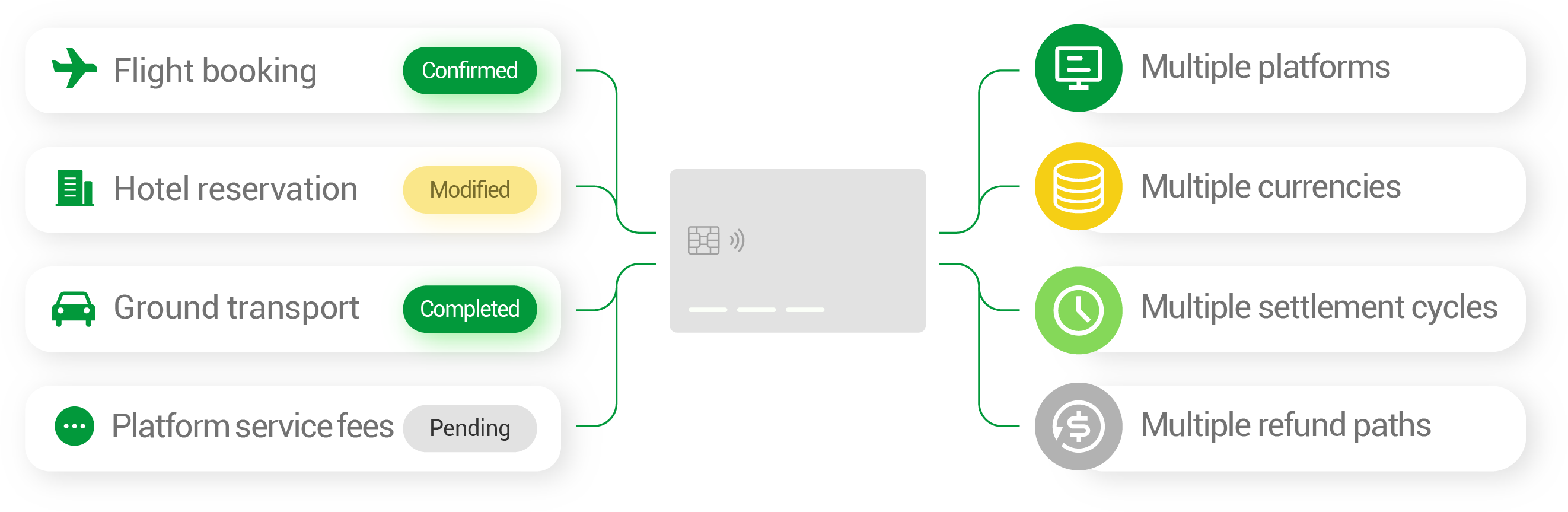
A single cross-border trip generates expenses spread across different platforms, suppliers, and currencies. The moment a rebooking, cancellation, partial refund, or cost split occurs, what started as one straightforward transaction becomes a sequence of related payment, refund, and settlement records that need to be tracked individually.
2. Employee Out-of-Pocket Spend and Platform Pre-Funding Coexist
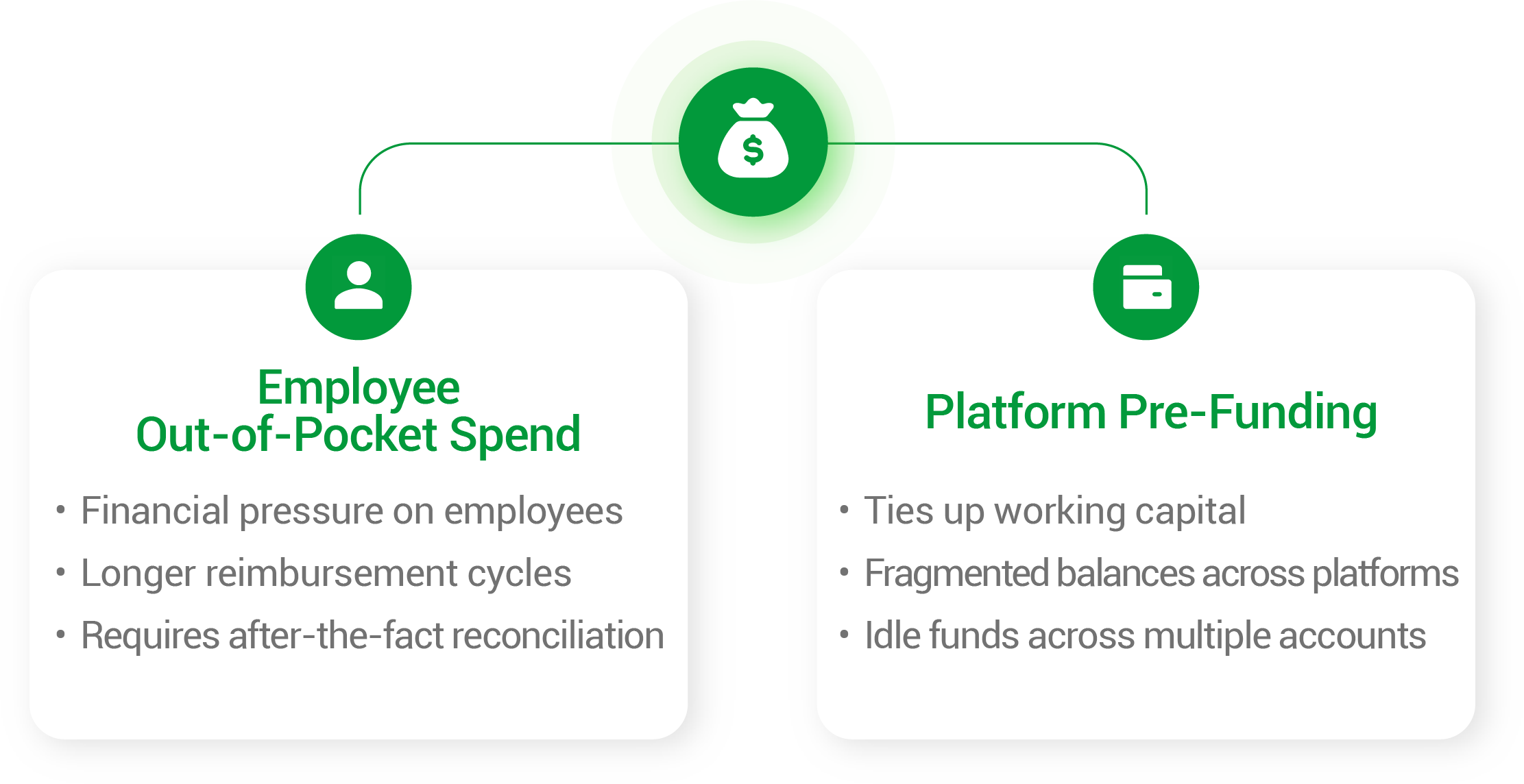
“Employee pays first, company reimburses later” stretches the reimbursement cycle and puts unnecessary financial pressure on employees.
Platform pre-funding and prepaid cards, meanwhile, create their own problems: capital gets tied up and becomes difficult to manage across multiple balances. Companies need to ensure travel payments can be completed without unnecessary operational friction while avoiding long-term fragmentation of funds across multiple platforms and accounts.
3. Reconciliation Relies on Manual Matching
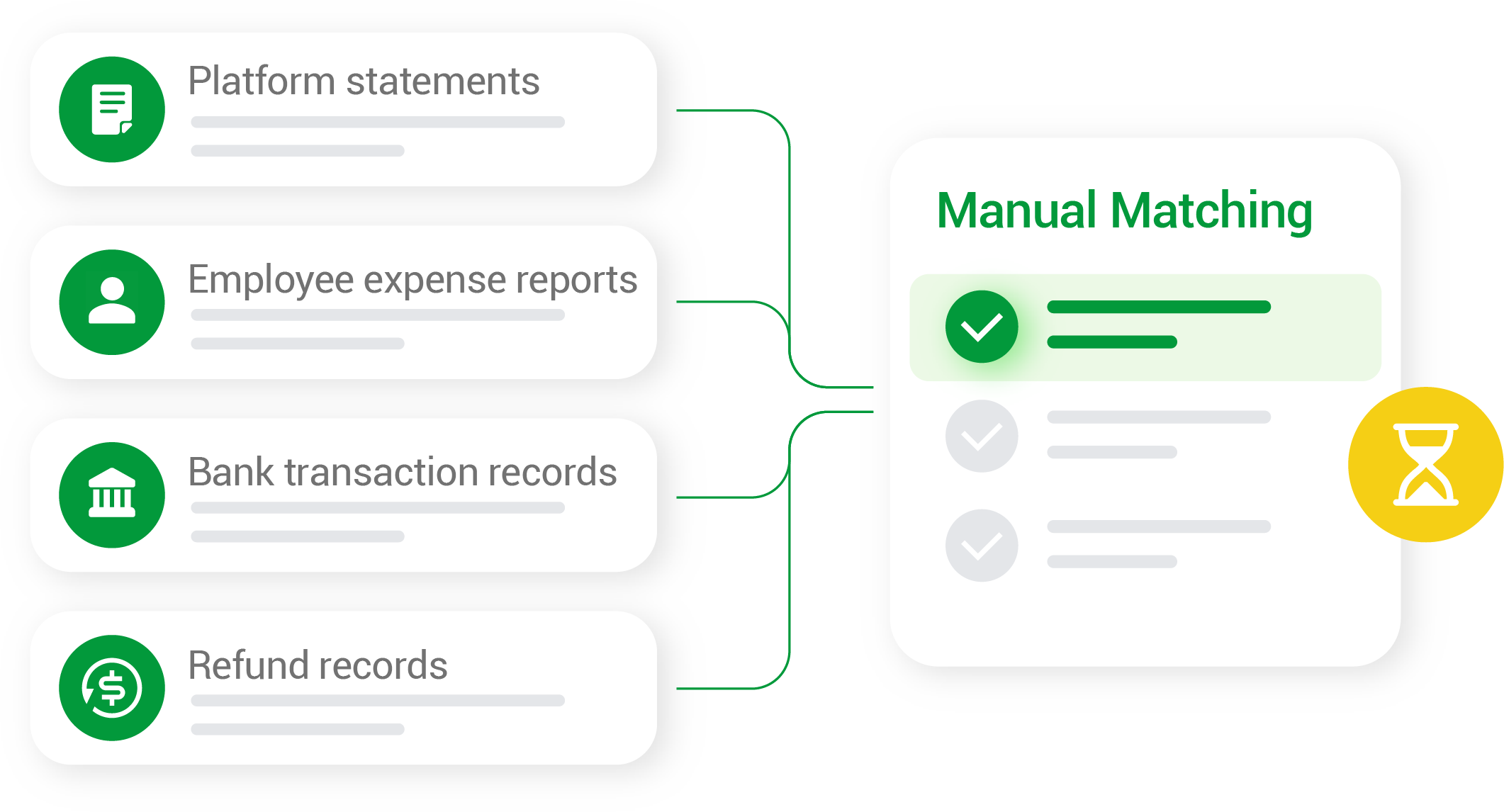
Travel reconciliation isn’t simply a matter of tallying totals. Every transaction has to be matched to an employee, a trip, a booking reference, an expense category, and an approval record.
When platform statements, employee expense reports, bank transaction records, and refund records all arrive in different formats, finance teams typically default to spreadsheets for manual matching. That process is time-consuming and prone to errors—duplicate reviews, missed entries, and refunds that fall through the cracks.
4. Spend Controls Often Come Too Late
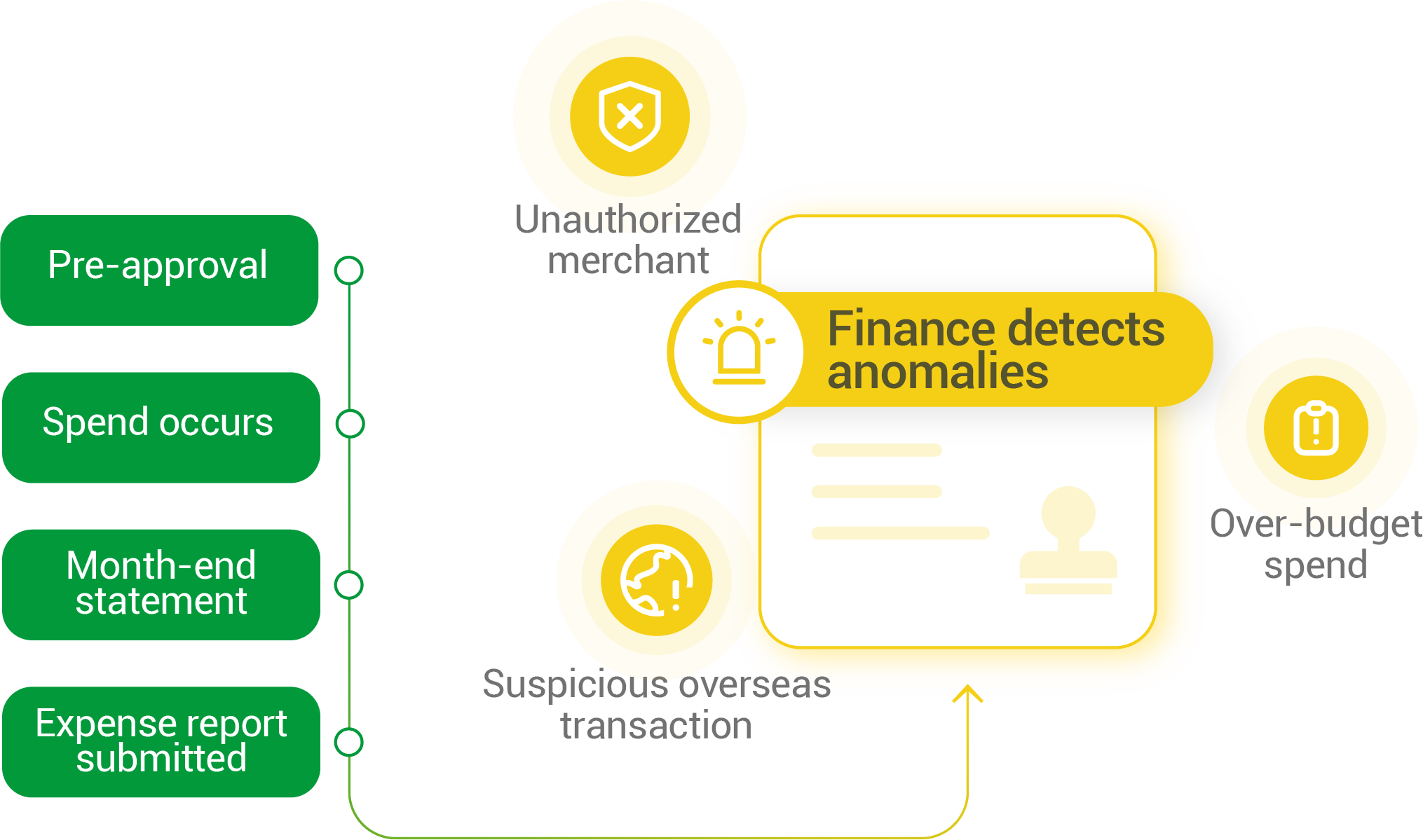
Most travel management programs still operate on a “pre-approval, post-reimbursement” model. In practice, an approved request doesn’t guarantee that every subsequent transaction will be compliant. Whether an employee exceeded the approved budget, transacted with an unauthorized merchant, or triggered a suspicious overseas transaction—finance typically doesn’t find out until the consolidated statement arrives or the expense report is submitted.
Travel spend ends up shifting from ongoing control to after-the-fact investigation.
The Real Priority in Travel Spend Management Is Not Simply Faster Reimbursement
When companies talk about improving travel management, the instinct is often to speed up reimbursements. But from a cash flow management perspective, reimbursement is only a downstream part of the process. What truly improves operational control is whether fund movements are clearly captured at the point of payment.
The question companies need to answer isn’t just “did the employee submit their expenses?” It’s:
- Where did this payment go?
- Which employee, trip, or booking does it match?
- Can refunds be traced to the original transaction?
- Is it within budget and authorized spend rules?
- Can finance see the full record before reconciliation?
In most enterprise environments, the actual payment happens outside the travel management system. Once payments, bookings, employees, budgets, and refunds lack a unified record, the subsequent work of aggregating costs, reconciling transactions, and tracking funds gradually falls back on manual effort.
That’s why the real priority in travel spend management isn’t making reimbursements faster—it’s helping ensure that every payment is captured in a clear, structured record the moment it occurs.
Oceanpayment Card + HELIOS: Making Travel Spend Manageable from the Point of Payment

This is where virtual card infrastructure does more than complete a payment—it connects the payment action to everything that comes after.
Oceanpayment Card and HELIOS, an enterprise travel and expense management platform, are working to create tighter integration across travel payments, expense management, and downstream fund tracking, making it easier to connect each transaction with a specific employee, trip, budget, and booking.
When payment records are captured in the expense management workflow as transactions occur, finance teams have more reliable data for reconciliation, expense matching, and refund tracking.
Before the Trip: Virtual Card Issuance by Employee, Trip, or Budget
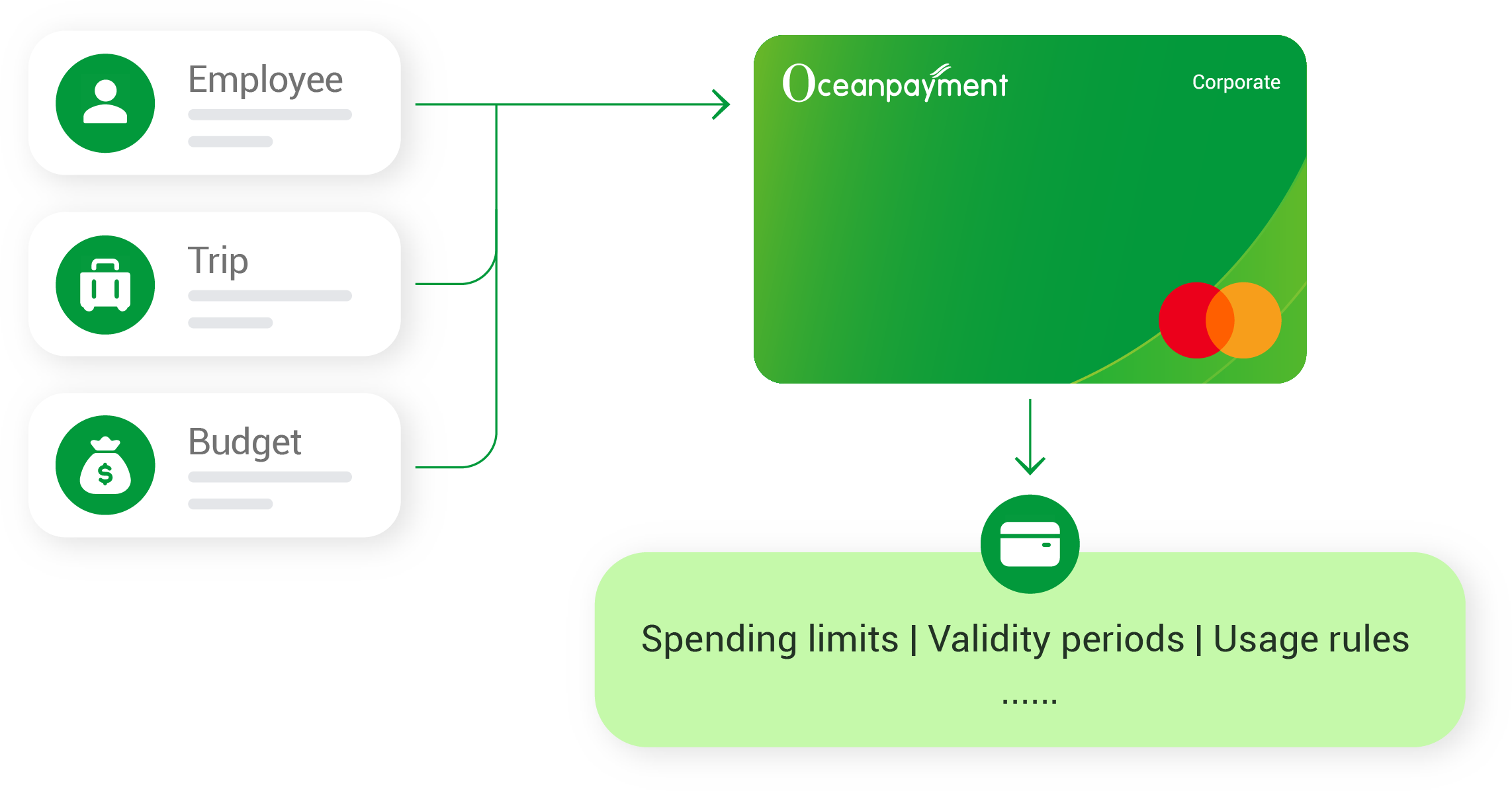
Companies can create individual virtual cards scoped to an employee, a trip, a budget line, or a project—with configurable spending limits, validity periods, and usage rules set upfront.
This means travel spend no longer needs to run entirely through personal employee accounts, nor does it need to be managed loosely through a shared corporate account or pre-funded pool. For finance, each virtual card maps to a specific travel assignment—and the corresponding transaction records can be mapped to the right employee, itinerary, and expense category.
During the Trip: Transaction Sync for More Timely Spend Visibility
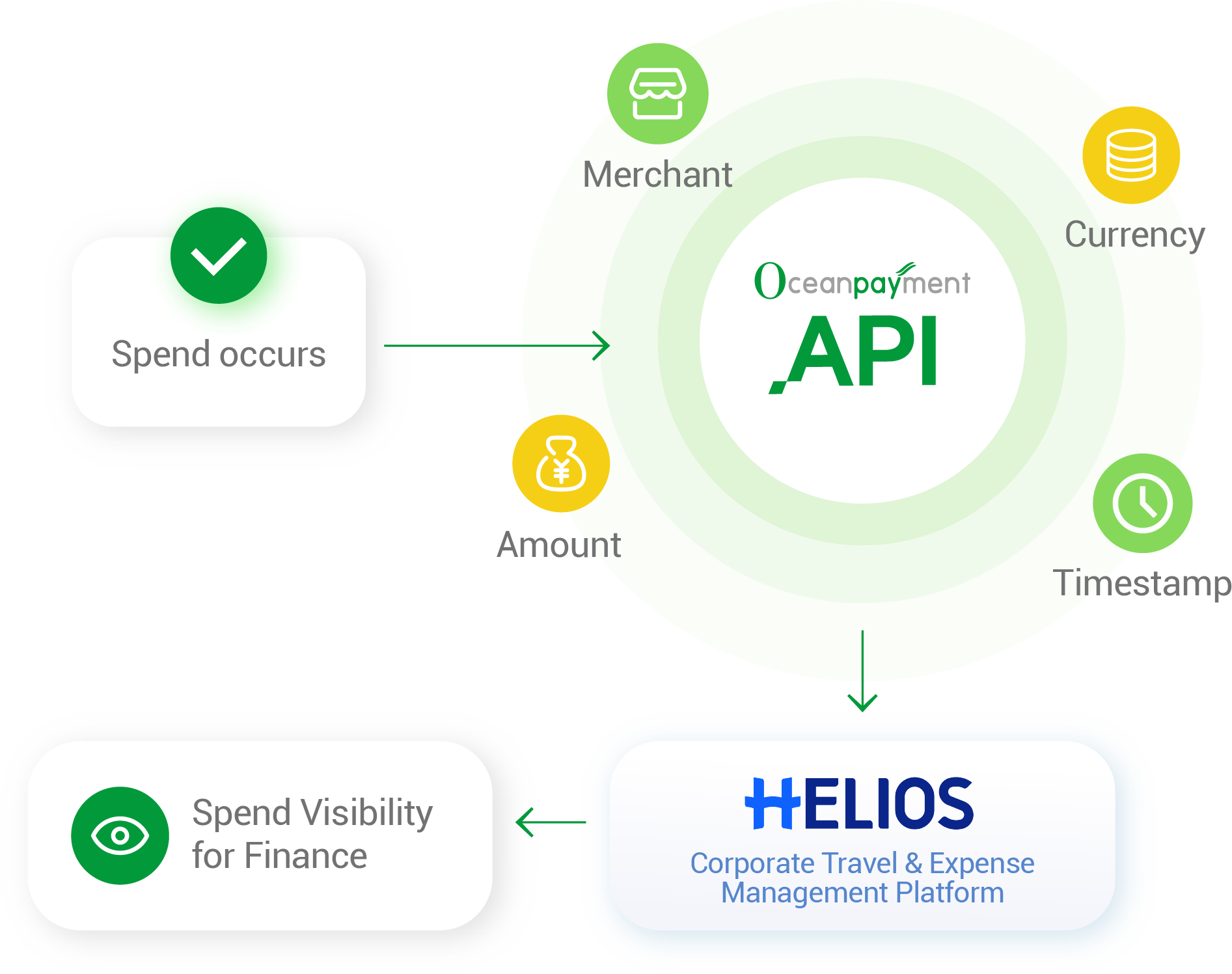
Every transaction can be synced via API to the HELIOS system, giving finance teams more timely visibility into transaction amounts, currencies, merchants, and timestamps—and the ability to apply company policy to flag overspending, anomalies, or non-compliant purchases.
This means finance oversight of travel spend doesn’t have to wait for employees to submit reports or for month-end statements to arrive.
After the Trip: Automated Expense Aggregation and Cleaner Refund Tracking
Once a trip concludes, the system can aggregate all relevant transactions by employee, itinerary, date, and expense category—reducing the manual work of cross-platform consolidation and line-by-line matching.
For refunds arising from rebookings or cancellations, funds are returned along the original transaction path back to the corresponding virtual card. In common scenarios, refunds can settle T+1, subject to workflow, system configuration, and integration setup—helping finance identify refund status faster and reducing manual follow-up on refund status.
What Actually Changes for Enterprise Travel Management?
For enterprise travel programs, virtual cards are not simply one more payment option. They represent a structural shift—moving travel spend from personal out-of-pocket spend and after-the-fact reimbursement toward company-authorized, policy-governed spend management.
For Travel Management Companies (TMCs) and Travel Management Platforms
With virtual card issuance and transaction sync capabilities, TMCs and travel management platforms can go beyond itinerary management, expense approval, and reimbursement workflows—adding a payments and fund-tracking layer to their offering.
This enables platforms to connect travel requests, payment records, employee itineraries, refund status, and expense reconciliation into a more complete travel expense management experience for their enterprise clients.
For Enterprise Finance Teams
For finance, the value is less manual follow-up after the trip.
- Reduce employee out-of-pocket spend and upfront capital tied up in pre-funding: When payments, bookings, employees, itineraries, and refund records can be mapped to one another, finance gains earlier visibility into fund movement.
- Improve visibility into travel spend: Transaction records sync to management systems more promptly. Finance doesn’t have to wait until month-end or until expense reports come in to understand where money has gone.
- Lower the cost of manual matching and refund tracking: Less cross-platform consolidation, fewer manual matches, less back-and-forth communication—and easier identification of over-budget, anomalous, or non-compliant spend.
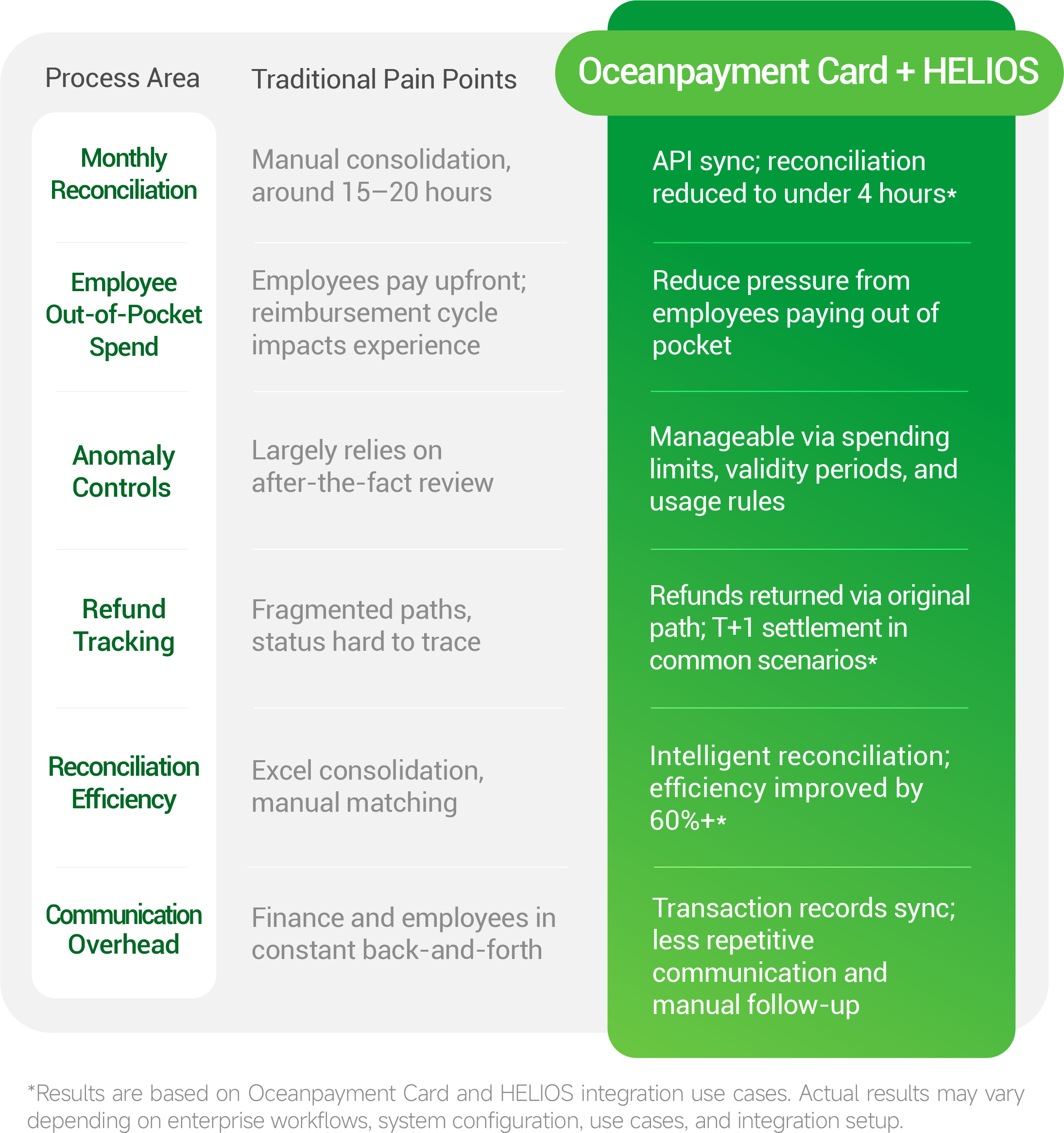
The goal of travel payment infrastructure is not simply to shorten the expense reporting process. It’s to help ensure that every transaction has a clear, traceable record from the moment it occurs. Employees shouldn’t have to navigate a cumbersome process. Finance teams should not have to wait until month-end to understand where funds have gone.
Difficult expense management and slow reimbursements are symptoms, not the source. The source is whether every payment can be recorded, tracked, and reconciled from the moment it occurs.





 粤公网安备 44030502003453号
Comments are closed.