


When consumers complete product selection within a conversational interface, can the system automatically complete the transaction within an authorized scope? As Agentic Commerce continues to evolve, this question is becoming increasingly relevant.
According to QuantumBlack AI by McKinsey, the global Agentic Commerce market could reach USD 3–5 trillion by 2030, indicating the rapid emergence of this new commercial paradigm¹. Since the beginning of 2026, Agentic Commerce has gradually entered real business scenarios. From content generation and information retrieval to workflow triggering and decision support, intelligent agents are beginning to participate in increasingly complete segments of the business process.
In most discussions around Agentic Commerce, the focus has primarily been on smarter recommendations and more efficient decision-making. However, when systems begin to initiate transactions, a more practical question emerges: How can transactions be completed within a compliant framework? Decision-making can be automated—but can transactions themselves be automatically executed?
Decision Capability Is Not the Same as Transaction Capability
At present, most Agentic Commerce capabilities are concentrated in the decision-making phase, including:
- Information retrieval and filtering.
- Product or service recommendations.
- Rule-based decision-making and automated workflow triggering.
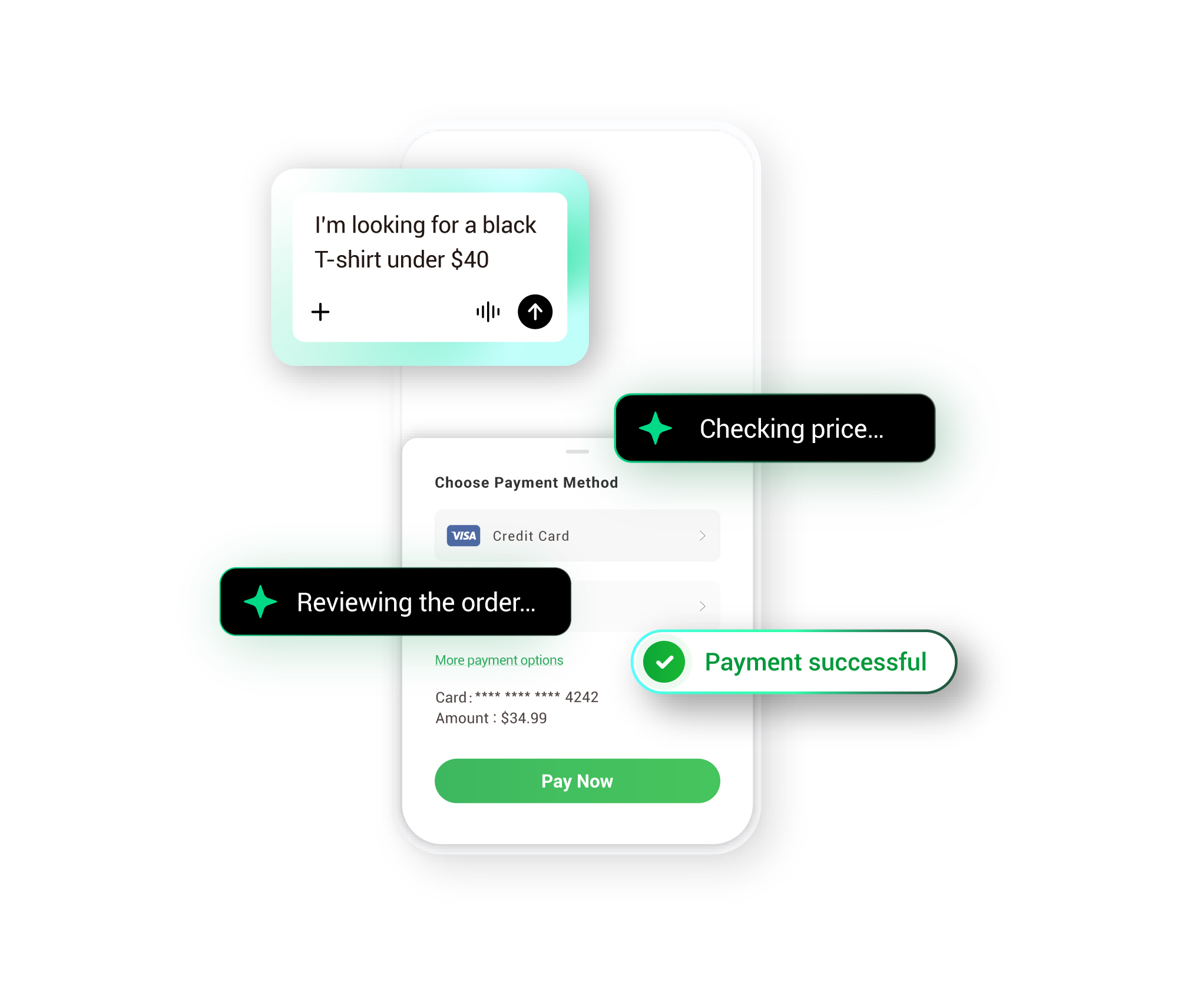 These capabilities significantly improve decision efficiency. However, a transaction involves more than making a selection—it also requires transaction execution. When processes such as order confirmation, fund transfers, identity verification, risk assessment, and payment processing come into play, the transaction moves into the payment layer. These capabilities are not inherently part of an Agentic Commerce decision model.
In other words, AI can assist with determining what to buy, but whether and how a payment is executed requires a separate layer of capability. Without payment execution functionality, Agentic Commerce remains closer to a decision optimization tool:
- It can generate orders
- It can trigger downstream processes
- But transactions must still be completed through existing payment infrastructures
From a transaction architecture perspective, payment capability is one of the foundational conditions required for a transaction to be completed.
When AI Begins to “Execute by Proxy,” How Are Transactions Completed?
As Agentic Commerce evolves from decision assistance to rule-triggered execution, the structure of transactions begins to expand. For example, in scenarios such as subscription renewals, automated replenishment, or conditional procurement, consumers or enterprises can predefine execution rules and payment authorization scopes. When conditions are met, the system initiates payment requests based on that authorization.
In such a structure:
- Agentic Commerce is responsible for decision logic and triggering logic
- The payment infrastructure is responsible for payment execution and risk assessment
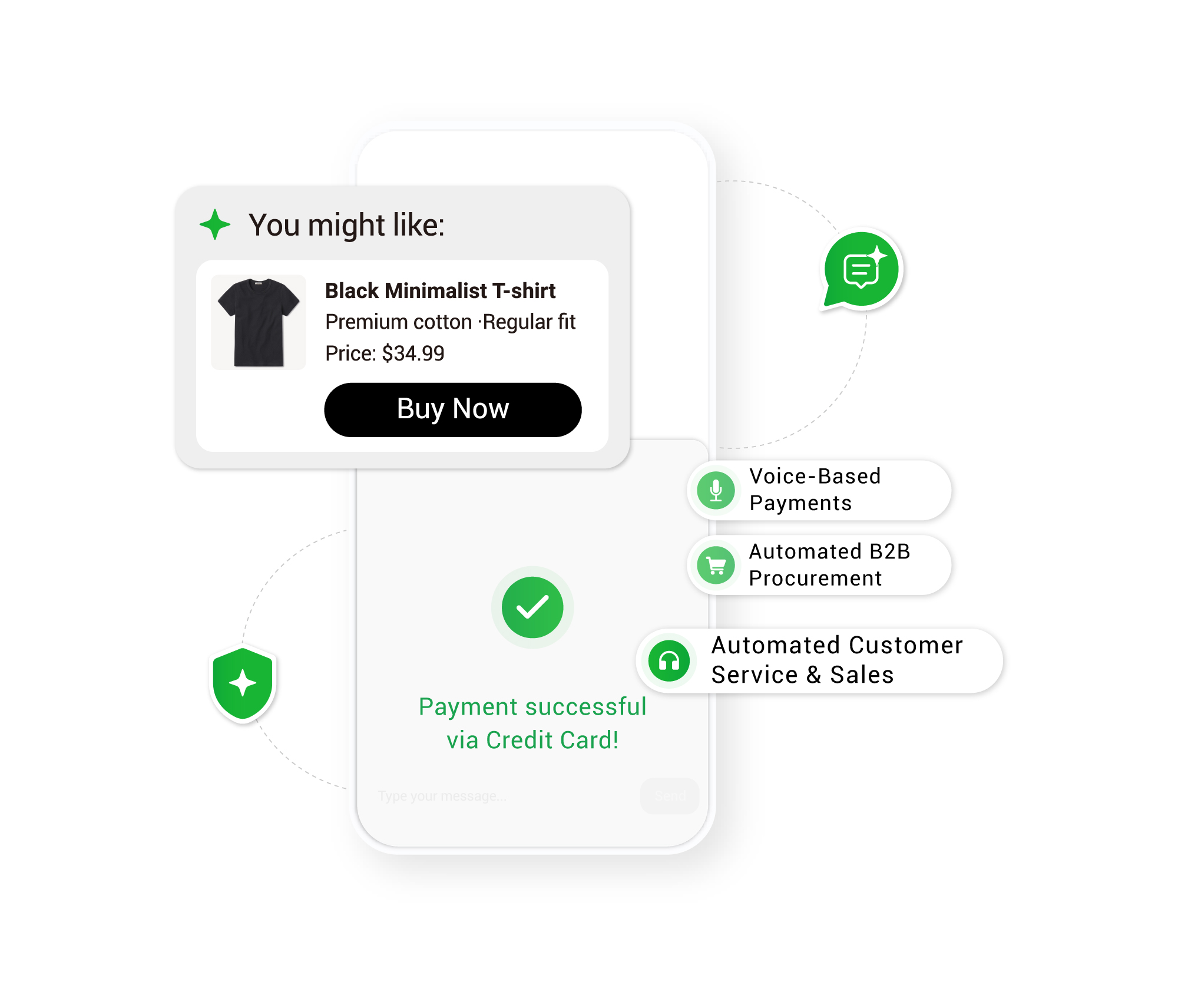
Transaction completion depends on the payment system performing processes such as payment authorization validation, risk detection, and payment routing integration. The key question is therefore not who places the order, but rather whether a transaction initiated by a system can trigger payment execution within a compliant and authorized framework.
As Agentic Commerce moves into execution scenarios, payments are no longer merely the final step in the process. Instead, they become a critical execution layer within the overall transaction flow.
Structural Changes Facing Payment Capabilities in Agentic Commerce
In traditional page-based transaction models, transactions are typically triggered directly by consumers in real time. The payment action is visible, the behavioral path is clear, and responsibility boundaries are relatively well defined.
In AI-driven scenarios, however, transaction initiation may take two primary forms:
(1) Human–AI collaboration
AI provides decision support, while the consumer confirms the transaction through interactive engagement and completes payment.
(2) Authorized execution
Consumers or enterprises predefine execution rules and payment authorization scopes, allowing the system to initiate payment requests when predefined conditions are met.
Under these models, the challenge for payment systems is no longer simply whether a payment can be processed, but how payment systems can be securely invoked by agent-based systems.
The key differences lie in who triggers payment calls and under what authorization rules the trigger occurs. As a result, payment infrastructures face three structural adjustments:
1. Changes in Invocation Methods
Payment systems must support direct system-level invocation, rather than relying solely on page-based payment flows.
2. Changes in transaction authorization mechanisms
Payment systems must provide verifiable and traceable authorization mechanisms to ensure payment execution remains within authorized boundaries.
3. Changes in risk control logic
Risk management systems must distinguish transactions initiated by agents and implement appropriate security controls between transaction initiation and payment authorization.
These changes do not replace payment infrastructures. Instead, they introduce a new capability within the transaction flow—support for rule-based, agent-triggered payment execution.
How Existing Payment Systems Can Support Agentic Commerce
For most mature payment infrastructures, supporting Agentic Commerce scenarios does not require replacing existing payment or settlement models. Instead, it involves adding execution capabilities that can be securely invoked by agent-based systems within the current framework. The core objective is not to make payment systems “smarter,” but to ensure that they can:
- Securely accept payment requests initiated by transactions within authorized scopes
- Automatically align with regulatory requirements across different markets to maintain compliance
- Ensure that payment execution within agent-driven transaction flows remains authorized, verifiable, and traceable
In the context of Agentic Commerce, Oceanpayment focuses on enabling secure agent-triggered payment capabilities on top of its existing compliant payment and settlement infrastructure—providing merchants with the necessary interfaces to support Agentic Commerce scenarios without altering their current payment models.
Beyond Efficiency: Ensuring Transaction Certainty
The shift from human-triggered transactions to agent-triggered transactions first changes the entry point of the transaction. Payments, however, remain responsible for ensuring that the transaction can be properly executed and completed in a secure manner. As Agentic Commerce continues to enter real transaction environments, the relationship between transaction structures and payment execution becomes increasingly important. Perhaps more important than who places the order is the question of who ultimately completes the payment execution.
References
McKinsey & Company — Agentic AI promises to radically remake the entire shopping experience. Here’s a glimpse into the near future—and what merchants, players, and platforms need to know in order to thrive.



 粤公网安备 44030502003453号
Comments are closed.